Sabakki Sandige | Sabudana Papad | Sago Vadams | Sun Dried Tapioca-Pearls Fryums
Sunday, August 04, 2024
Sandige are prepared during summer and are used during monsoon season. Some
parts of south India gets such a heavy rainfall and floods that its hard to get out of
the house to get vegetables. Before refrigerators come into our life, Sun
dried fryums and pickles were ways of preserving food for 'rainy days'.
These are still prepared and in use as they are yummy, and serves as snacks as well
...and anyway, one can not depend on electricity during monsoon :P
Sandige
is served mainly as side dish with rice. There is no word for Sandige in English,
'Fryums' was the first commercial brand which sold sandige/vadam made with
potato starch & tapioca flour in India. The name got stuck and people simply use the word
'Fryums' for Sandige or Vadams.
There are different variety of sandige and happala:
-
Base ingredient: akki/rice, ragi (finger millet), sabakki(Tapioca Pearls), aralu (Puffed
paddy rice), avalakki (pounded rice), semolina
-
Sandige made with vegetables - potato, bitter gourd, ivy gourd, green
chilies
-
Papad/Happala: akki/rice, jackfruit, avalakki/poha, urad dal/black
gram, karada (spicy red) happala, potato, genasina (sweet potato)
-
Combination of - black gram + ash gourd, aralu + ash
gourd,
-
Dal Vadi (sun-dried lentil dumplings): Toor dal (split pigeon peas), moong dal,
Punjabi vadi - these sun dried dumplings are used in making
curry.
Sabakki/Tapioca Pearls sandige is one of the easiest to make. ...at least
for me. You can not go wrong with it, good recipe for newbies venturing into making sandige. I also feel it's the tastiest one. I
could be biased. This is my mom's recipe. She is used to make every summer -
a lot of it. Not only store a huge quantity for us, she used to pack batches of
them to share with others as well. Every year, she used to make sandige with
rice, ragi, sabakki, potato, bitter gourd, ivy gourd and green
chilies.

Ingredients:
- 1 cup - Sabudana / sabakki / tapioca pearls
- 4 cup - Water
- 1 tsp - Green chilli paste (or as per taste)
- 1 tsp - Cumin / jeera
-
¼ cup
- Onion finely chopped (optional)
- pinch - Hing / asafoetida
- Salt - as per taste
Method:
-
Rinse 1 cup of sabakki couple of times and soak in enough water for at least 3 to 4
hours.
- After soaking, drain and keep it aside.
- In a large pan, bring 4 cups of water to boil.
- Add soaked sabakki to the boiling water.
- Mix-in chilli paste, cut onion and salt.
- Occasionally stir and cook until sabakki becomes translucent.
- Turn of the flame, add cumin and hing. mix it all well.

- Let it cooldown for about 10 minutes, the mixture will become more thick.
-
Meanwhile, prepare the trays to put sandige on. I used parchment paper for
lining on baking trays, you may use clean thick plastic sheets or use steel trays without lining.
-
Using a long spoon, place a tbsp of prepared sabakki mixture on the sheet
and slightly spread making a small rounds.

-
Sun dry them for 2 days or till it dries out completely. I transfer all the
sandige on one tray on day-3 and put it out in sun for one more day. NOTE:
bring the sandige inside the house in the evening and put them out next day
morning. Do NOT leave them out overnight.


-
On the last day, once you bring the sandige inside, let it air out for
couple of hours or overnight, then transfer it to a container.
Fry and Serve:
-
Put deep-fry pan on stove with about two cups of oil on high flame.
- Once hot, reduce the flame to medium-high
- Carefully slide few sun dried sabakki sandige to the hot oil. It will start to bubble and swell.
Use a slotted spatula or long strainer spoon to move them to the center and flip the sandige and make
sure it is cooked at the edges by pushing it into hot oil.

-
Remove the fried sandige from the oil and transfer on to a paper towel to
drain extra oil.
- Fry in multiple small batches to cook them evenly and is manageable. Do not crowd the fry pan.
- Sandige is ready to serve as a snack or as a side dish with rice.
NOTE:
- Use medium size sabakki/sago . Don't use nylon variety.
- It is better to soak the sabakki overnight, so that you can make the mixture early in the morning. And when you put it out in the sun, it will receive a full days sunlight to dry well. By end of the day one, it would have started to leave the lining sheets.
- While preparing the mixture, if the mixture becomes too thick, just mix little bit of hot water.
-
If the mixture is watery, take some raw sabakki, blend it into powder. Mix
in the powdered sabakki to the mixture and cook for about 3 to 5 minutes and let it cool. This will
help the mixture to thicken
-
Salt should be added carefully. When you taste the batter, it should be
mild, after sandige dries it will be just right.
-
When deep fried, the sandige will expand, therefore keep the size little
small.
-
Using onion is optional. But if you don't mind, use it. It really tastes good.
-
If you have small children in house, reduce the chilli paste to reduce the
spice or not use it at all.
-
Instead of green chilli , you can grind red chilli and tomatoes to get
tomato flavor and red colored sandige .
-
You may add lime juice along with cumin; or 1/2 cup buttermilk while
cooking for some tanginess.
We leave in bay area and are blessed with plenty of sunshine in summer - excellent condition for drying sandige. But also, there are Seagulls in the area as well, not a lot compared to coastline, but better to be cautious then to risk it. We have covered patio in our backyard, I placed sandige at the East-edge of the patio in the morning and moved it to West-edge around noon - still under the patio to avoid seagull droppings. I placed the trays with sandige on garden chairs and/or iron-board, so it was easy to move. Sandige did not receive sunlight for about half hour around noon, but since we have longer summer days, it does not matter.
Labels: Appetizers, Sago, Sandige/Happala/Fryums, Side-Dish, South-Indian Dish, Vegetarian
~ Sabakki Sandige | Sabudana Papad | Sago Vadams | Sun Dried Tapioca-Pearls Fryums
~
Posted by Swetha @ 8/04/2024 03:16:00 PM ::
 Swetha's Fusion
 ::
permalink
Sabudana Vada in Airfryer [Tapioca pearls fritters]
Tuesday, June 22, 2021
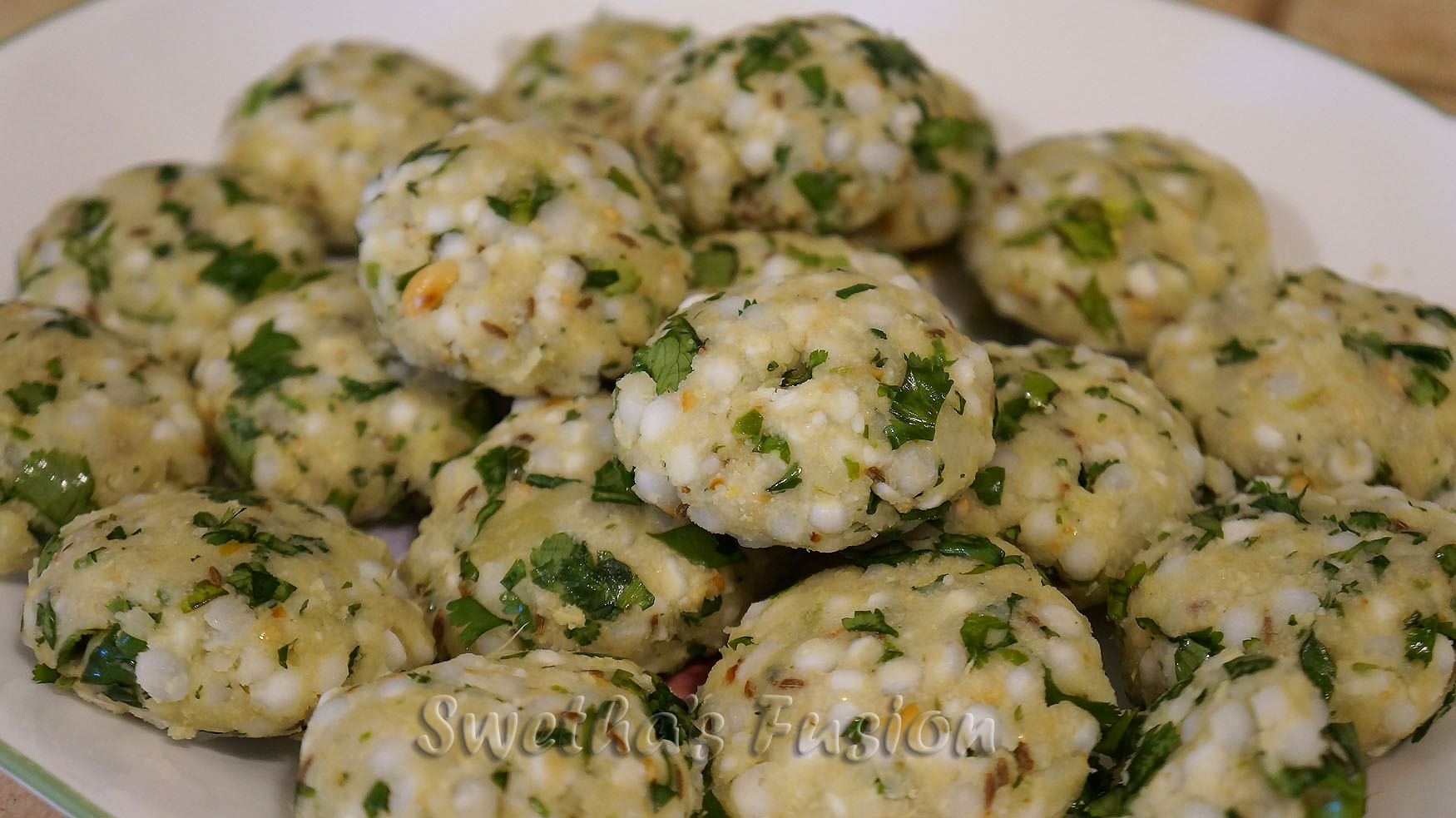
Here is the Air-fried version of the
Sabudana Vada, which is traditionally deep-fried fritters. I found no difference in taste between Air-fried and deep-fried. In fact, I felt air-fried vada taste better or may be because it has very little oil. All of sudden fritters became healthy snack ;)
Check out other
Sabudana/Sago/Tapioca Pearls recipes.
Ingredients:
- 1 cup - Sabakki/Sago/Tapioca Pearls
- 1 big - Boiled Potato
- 1 tsp - Jeera/Cumin seeds
- 1/3 cup - Dry roasted Peanuts powder (coarsely powdered)
- 1 tsp - Ginger paste
- 2 tsp - Green Chilli minced paste
- 1 tsp - Lemon juice
- 1/4 tsp - Sugar
- 1/2 cup - Coriander leaves - finely chopped
- 1/4 cup - dill leaves (optional) - finely chopped
- 1 tsp - oil
- Salt - as per taste
Method:
- Rinse sago well with water and soak sago overnight or for at least 5 hrs with enough water just to immerse it well. Drain the Sago in a strainer and set aside sago in the strainer on a stand or a bowl to let rest of the water drain.
- Dry roast peanuts till the skin splutters.
- Discard the skin and grind the peanuts to a coarse powder. (I make extra and save the powder in a air-tight jar for next time or for Sabbakki uppittu/Sago Khichdi)
- In a blender I combine ginger and chili to make paste, rather preparing it separately.
- In a mixing bowl - add sago, peanut powder, mashed potato, jeera, ginger/green chili paste, lime juice, sugar, coriander leaves (or dill leaves,) oil and salt as per taste.
- Mix all together, it should form into a ball easily when pressed into one, If needed sprinkle little water if it is dry or add little rice flour if the mixture is watery.
- Apply oil on your palm so that the mixture wont stick to your hands. Press the mixture into lemon sized ball and press slightly flat in between center of your palms to shape into vada. Keep aside on a plate. Work with rest of the mixture to make all the vada ready.
- Place the shaped vada in the air-fryer basket. you may line it with parchment paper if you wish. I use a 2-tier wire rack. I brush the rack with oil and place the vada on them. Using 2-tier rack allows me to make about 18 vada at a time. Which helps save time and electricity.
- Brush or spray the vada(s) with oil. place the rake (or basket) in the air-fryer.
- Air-fry for 13 minutes on 395F (200C).
- After about 13 minutes, brush/spray oil on the top, now flip the vada over and brush/spray oil on the other side of the vada. Since I use 2-tier rack, I even switch the vada between top and bottom rack for even cooking and roasting. Airfry for 8 - 10 minutes more, or until done.
- Serve hot with green chutney or tomato sauce.
Enjoy these healthy, guilt-free Sabudana vada with your family and friends.

Labels: Air Fryer, Appetizers, Fritters, Healthy dish, Sago, Side-Dish, Snack, Vegetarian
~ Sabudana Vada in Airfryer [Tapioca pearls fritters]
~
Posted by Swetha @ 6/22/2021 06:40:00 PM ::
Swetha's Fusion ::
permalink
Sabudana payasam, Sabbakki payasa or Sago kheer
Friday, November 29, 2019
Sabakki or sago payasa is one of the easy to make dessert. I usually make it to have after a heavy meal like chicken or fish, to help digestion and clam your system. Also a good kheer to have after fasting. Word payasa or payasam is used in south-India and kheer in northern part of India.
Ingredients:
- 1/4 cup - sabakki or sago or sabudana
- 2.5 cup - milk
- 1.5 cup - water
- 1/4 cup - sugar
- 2 tsp - ghee
- 5-6 cashews
- 8-10 - raisins
- few strands of Saffron/kesar/kesari (optional)
- 1/4 tsp - cardamom
Method:
- Clean sago couple of times or until the water runs clear.
- Soak sago for 30 minutes or over night in water.
- Drain the soaked water and transfer the sago to a pan.
- Add 1/2 cup water and put it on stove for medium flame and bring it boil.
- Along side, in an another pan, bring milk to boil.
- Once sago is comes to boil and turns translucent, add sugar and stir.
- One low-medium flame bring to slow boil. Stir in between not to let the kheer burn at the bottom of the pan
- Add hot milk and let it boil for 30 seconds. Turn off the flame.
- Mix-in Saffron and cardamom powder.
- In a seasoning pan, heat the Ghee. Once it is warm add cashew, roast it slightly, now add raisins and continue roasting. the raisins will swell. Turn off the flame and pour the content over the sago kheer.
- Serve hot or cold(refrigerated). Enjoy!
NOTE: Sago payasam/kheer thickens after a while. If you prefer payasam to be runny, may add more hot milk.
Similar dessert dishes:
Kesar Shrikhand, Gasagase Payasa
Other Sago dishes:
Sago khichdi/upma, Sago Vada
Labels: Desserts, Festive Food, Sago, Sweet, Traditional Sweet
~ Sabudana payasam, Sabbakki payasa or Sago kheer
~
Posted by Swetha @ 11/29/2019 11:19:00 AM ::
Swetha's Fusion ::
permalink
Sabakki /Sago / Sabudana khichdi/upma
Saturday, December 31, 2016
 Sabudana or Tapioca pearls has good source of protein, which helps with muscle building, healing and strengthening. So vegetarians, turn to sabudana for their daily protein intake. Tapioca is rich in iron and calcium, which helps maintain bone health. Sabudana is good for pre and post pregnancy. Also prepared into baby food once baby is ready solid food.
Sabudana uppma or kheer is a good choice to consume after religious fasting. Just don't add onion.
Sabudana or Tapioca pearls has good source of protein, which helps with muscle building, healing and strengthening. So vegetarians, turn to sabudana for their daily protein intake. Tapioca is rich in iron and calcium, which helps maintain bone health. Sabudana is good for pre and post pregnancy. Also prepared into baby food once baby is ready solid food.
Sabudana uppma or kheer is a good choice to consume after religious fasting. Just don't add onion.
Ingredients:
- 2 cups of Sabudana
- 1/2 cup of potatoes
- 1/2 cup peanuts
- 1 Onion (Optional)
- 1/4 tsp turmeric/haldi (optional)
- 3-4 curry leaves
- 1/2 tsp of cumin seeds/jeera
- 4-5 green chillies
- 1 tsp sugar
- 3 tsp oil
- Salt to taste
- Juice of a lemon
- Cilantro/Coriander leaves for garnish
Method:
- Wash the sabudana in enough water twice or thrice and drain the water. Now soak it in a flat bottom container. I soak it for at least 4-5 hours or I soak it over-night for morning breakfast.
- Drain the sabudana in a colander/strainer and keep aside the colander with sabudana for it to completely drain the water.
- Take a pan and dry roast the peanuts till evenly brown, then remove the skin and pulse them into a coarse powder. Keep aside. HINT: As I feel this is the most time consuming part of this dish, I make a bigger batch of Peanut coarse powder and store it in a air tight container. May be stored in freezer too.
- Peel the potato and chop them into small pieces and boil it separately. I usually, cook the potato cubes with salt in Microwave for about 5 to 8 minutes.
- Heat a pan and add oil in it. Add the cumin seeds, curry leaves, and chopped/slit green chillies. [Optional: Add chopped onion and suate until onion is translucent.] Add the cooked potatoes. Sprinkle some salt and stir until the potatoes get crisp on the outside.
- Stir in turmeric powder. This is optional, but I like little bit of it in my uppma.
- Now add the sabudana to this and toss well on medium flame. Cover with lid for a minute.
- Note: If you feel that the sabudana has become very dry then you can sprinkle some water and mix.
- The sabudana will become translucent when they are done. After the sabudana is cooked completely, add the coarse peanuts and lemon juice.
- Toss to mix and switch off the heat. Garnish with the finely chopped cilantro leaves.
Try the recipe and let me know how it comes out. Happy Cooking!
You may be also interested in
Sabudana Vada
Other Upma Variety: Rava upma, Sago upma, Bread upma, Avalakki upma, Shavige upma, String Hopper (Indian Rice Noodles) Upma, Millet (Siridhania) upma, Wheat/Godi kadi upma, Oats upma, Quinoa upma, Buckwheat upma, Amarnath seeds upma the list goes on.
Labels: breakfast, Lunch-box, Sago, Tiffin Variety, Upma, Vegetarian
Sabakki/Sago /Sabudana vade
Sunday, October 30, 2016

Ingredients:
. Sabakki/Sago - 1 cup
. Boiled Potato - 1 big sized
. Jeera/Cumin - 1 tsp
. Peanuts - 1/3 cup
. Ginger paste - 1/2 tsp
. Green Chilli - 1 finely chopped
. Lemon juice - 1 tsp
. Sugar - 1/2 tsp
. Coriander leaves - 1.5 tbsp finely chopped
. Salt - to taste
Method:
1. Rinse sago well with water and soak sago overnight or for at least 5 hrs with enough water just to immerse it well. Drain the Sago in a strainer and set aside sago in the strainer on a stand or a bowl to let rest of the water drain.
2. On a griddle, roast peanuts till the skin splutters.
3. Discard the skin and grind the peanuts to a coarse mixture. (I make extra and save the powder in a air-tight jar for next time or for Sabbakki uppittu/Sago Khichdi)
4. In a mixing bowl - add sago,peanut powder,mashed potato, jeera, ginger paste, green chilli, lime juice, sugar, coriander leaves and required salt.
5. Mix the mixture, it should form into a ball easily when pressed into one, If needed sprinkle little water if it dry or add little rice flour if the mixture is watery.
6. Press the mixture into lemon sized ball and press slightly flat in between center of your palms to shape into vadas. Keep aside on a plate. Work with rest of the mixture to make all the vadas ready.
7. Heat oil - add the sago vadas , carefully turn over and cook till golden brown on both sides.Cook in medium flame to avoid burning.
Serve hot with green chutney or tomato sauce.
I enjoy my yummy Sabbakki Vadas with evening Tea, especially on a rainy-day with Gazals in the background.
Happy Cooking!!
Labels: Appetizers, Sago, Snack, Vegetarian